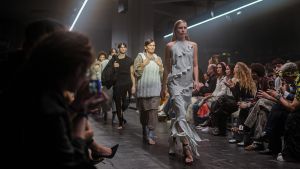





HFDA Academy: New View | Episode 1 | New Challenges, New Approaches
Data-driven Crisis Management in the Hungarian Fashion and Design Industry
Research results carried out by the HFDA
The Hungarian fashion and design industry players were among the first to experience the impact of the Coronavirus pandemic on consumer habits, which took place in the sector in the form of a large decrease in demand and revenue. The Hungarian Fashion & Design Agency prepared and created an industry survey to ensure visibility and measurable data regarding the difficulties and challenges industry players are now facing in order to take the appropriate steps needed to mitigate the consequences of the pandemic.
In order to assess the current situation, and as a coordinating organisation, the Hungarian Fashion & Design Agency evaluated the effects of the pandemic on the fashion and design industry with a questionnaire and held continuous consultations with industry experts in order to get a comprehensive picture of the impact of the pandemic on the industry. To take into account the results of the survey, and develop the necessary measures reflecting on the needs of the industry players, the HFDA set up workgroups to evaluate the situation and take appropriate action. Based on the responses the HFDA has put together a proposal package for the Action Group responsible for relaunching the economy, the details of which we hope to report on soon. Thanks to the effective cooperation with industry players, the Hungarian Fashion & Design Agency has been successful in representing the sector's political interests: the creative industry will soon receive a special rescue package from the Government, which is an important feedback on the sector's importance in the domestic economy.
In order to achieve this, the Hungarian Fashion & Design Industry played an essential role and provided an excellent background for the needed crisis management measures to alleviate the effects of the pandemic on the fashion and design industry. The survey on which the database is based on was filled out by 369 domestic fashion and design companies, with almost the same number of responses from both manufacturers and designers. Respondents identified the decline in demand as one of their biggest challenges: with most reporting a decline in performance of 75 per cent or higher.
The main reason for this is that the process of personal sales is an essential part of the daily operations of Hungarian fashion and design companies, which has almost completely disappeared due to changed consumer habits – those businesses with their own stores have closed and sales at fashion and design events have become unfeasible. As a result, nearly a third of those surveyed operate at a capacity of at maximum, up to 20 per cent.
Further factors causing difficulties, is that despite the decline in revenues, the expenditures of businesses have not decreased, due to the need to pay tax burdens and labour costs, which has caused a serious liquidity problem for Hungarian fashion and design companies: three- quarters of respondents are only able to adhere to their financial obligations for up to 2 months.
In addition, many are also being adversely affected by the decline in international trade: 80% of the sales of every fifth company were accounted for by exports, which industry players are now unable to expect or rely on.
The geographical aspect and extent of the supply chain also play a key part in the operation of industry players: companies are now in a particularly difficult position regarding the need to carry out several of their processes abroad, by which their operations are highly dependent on restrictive measures taken by other countries affected by the coronavirus. This also affects the procurement of raw materials as well as transport. One in five respondents has a business that operates across borders and due to this, is experiencing a downturn. 45% of respondents are suffering from a shortage of basic materials, where the import of these materials are currently restricted due to the virus and cannot be replaced, or only by a more expensive, lower quality substitute.
The pandemic has also had an adverse effect on employment: the number of full-time employees has fallen by 50%. At the moment, full-time employees have started to continue their work part-time or remotely, via telework, and in several cases, they are on unpaid leave or are working during the period of notice.
Similarly to other sectors, the domestic fashion and design industry was hit completely unexpectedly by the economic situation caused by the pandemic: half of the companies did not have a prepared scenario to deal with the unprecedented situation at the beginning of the crisis, but a third started developing one in March, to prepare for the challenges ahead. 95% of industry players estimated that the consequences of the epidemic would last over a longer period, even over a year, highlighting the need for long-term business strategy and thought process.
With the New View video and podcast series, the aim of the Hungarian Fashion & Design Agency is to support and help industry players to take on the challenges posed by the pandemic as effectively as possible and laying down the groundwork for strategic thinking required by the situation. Reflecting the needs of the industry based on research, experts taking part in the content of New View will be providing professional advice to industry players on digital marketing, labour law, labour issues, finance, and management.
A summary of the pro-publication in English is also available in a downloadable form: click here
More articles
The Hungarian Fashion & Design Agency Continues Its Operations Under the Name Creative Hungary Nonprofit Zrt.

BCEFW Young Talents Designers Featured in the Design POP-UP by ELLE Selection